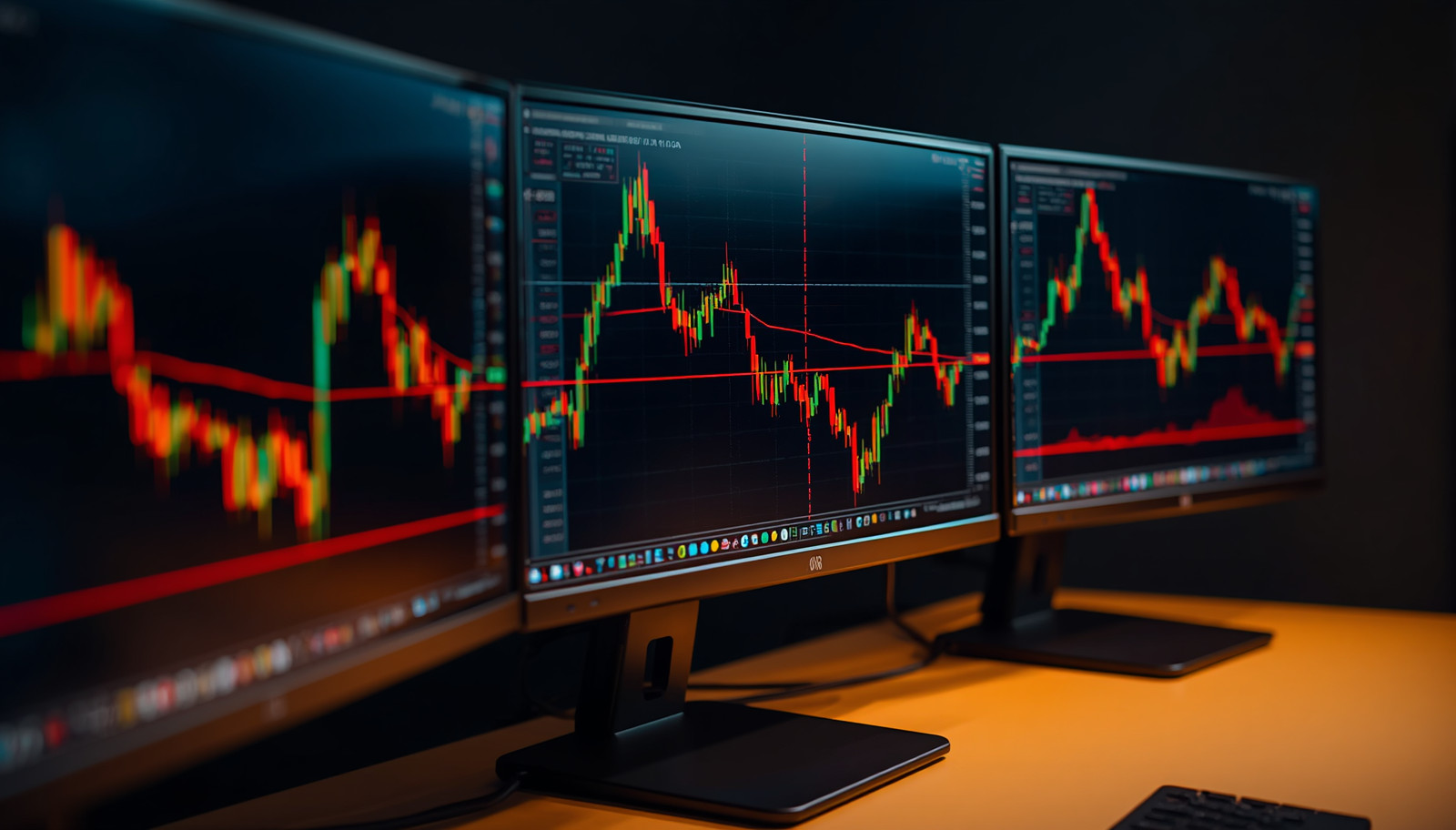
Inner Circle Trader (ICT) methodology and Smart Money Concepts (SMC) have a strange split reputation. On TradingView and YouTube they're sometimes treated as retail mysticism — order blocks drawn over arbitrary candles, fair value gaps explained with the same casual confidence as moon-phase astrology. On institutional trading desks, the same concepts have been operational tools for thirty years, used differently and described in different language. The gap between the two communities isn't intellectual — it's tooling.
If you're building or trading with an AI-augmented ICT strategy, the question worth asking is: what do professional desks actually do with these concepts, and where do retail-grade tools (chart indicators, signal services, off-the-shelf bots) leave the methodology stranded?
What ICT and SMC are actually describing
Strip away the names. ICT and SMC are describing liquidity dynamics at multiple timeframes. The core claim is that price doesn't move randomly — it moves to fill orders that exist at specific levels, where institutional participants are positioned, and the marks of those movements are visible in the chart structure if you know how to read them.
Three primitive concepts do most of the work:
Order blocks. Price zones where institutional positions accumulated, identifiable by a specific candle pattern preceding a strong move. When price returns to an order block, the residual orders create predictable reactions.
Fair value gaps (FVGs). Three-candle imbalances where price moved so fast that the middle candle's range wasn't filled. The market tends to revisit these to "fill" them, providing high-probability entry zones.
Liquidity sweeps / stop hunts. Movements that target specific price levels (above swing highs, below swing lows) to trigger pending orders before reversing. The institutional rationale: clear out the obvious stop-loss clusters before the actual move begins.
None of this is mystical. It's pattern recognition over how order books work in markets with large institutional participants.
What institutional desks actually do
A trading desk at a bank or hedge fund using these concepts looks nothing like a retail trader's chart. Three structural differences:
They operate across timeframes simultaneously. A retail trader looks at the H1 chart and identifies an order block. The institutional desk has analysts watching D1 structure, H4 structure, and execution traders working M5 entries — all on the same trade. The order block on H1 is a secondary signal, confirming a directional bias already established at the D1 level. Single-timeframe ICT signals are the noisiest kind. Multi-timeframe confluence is where the edge lives.
Execution is decoupled from analysis. The analyst who identifies the setup doesn't place the order. The execution trader handles when, how, and at what price — using volume profile, time-of-day liquidity, and broker relationships. The setup might say "long EUR/USD on retest of 1.0850 order block," but the execution decision is "wait for confirmation in the form of three M5 closes above 1.0852 with declining bid-side volume, then enter half size, scale up over the next 15 minutes." Retail tools collapse these into one step, which destroys most of the edge.
They model their own market impact. A retail position of 1 lot doesn't move EUR/USD. A desk position of 2,500 lots moves it noticeably, and the desk knows it. They time entries to coincide with liquidity windows (London/NY overlap, major fixings) and break large positions into algorithmic execution slices (TWAP, VWAP, or POV). Retail traders don't have to model market impact, but they also don't get to benefit from the predictability that liquidity timing provides.
Where retail tools fall short
Most retail ICT tooling — TradingView indicators, EA-based MT4/MT5 bots, signal services — does one or more of these things wrong:
Single-timeframe order blocks. The indicator marks every potential order block on the current chart. The trader gets fifty marks per week and trades them all. The institutional version filters those down to the 3-5 that have higher-timeframe confluence. Without the filter, you're trading noise.
Static FVG zones. Most indicators draw FVGs as static lines and never update them. In reality, FVGs have an expiry — if they're not filled within a certain time window, they're no longer institutionally relevant. The order flow that created them has shifted. Static lines on a chart don't capture this.
No volume confirmation. ICT entries should be confirmed by volume signatures — declining bid-side or ask-side volume at the entry zone, depending on direction. Forex retail platforms don't show real volume (the "volume" they show is tick-volume, which approximates it poorly). Without volume confirmation, you're flying half-blind.
No session-time awareness. Liquidity sweeps work very differently in Asian session versus London session versus NY session. A retail tool that treats all hours equivalently mis-signals consistently. The institutional version weights signals by session and skips entirely during low-liquidity windows.
No drawdown discipline. This is the big one. Even a perfect ICT setup has a 35-45% loss rate in practice. The institutional desk handles this with rigorous position-sizing and per-trade risk limits, and shuts down the strategy entirely if it strays beyond drawdown thresholds. Retail tools usually don't enforce this; the trader's emotional state does, and the trader's emotional state is the worst-calibrated risk manager in the world.
Show the mechanism
A serious AI-augmented ICT system collapses these institutional advantages into something a single operator can run. Concretely:
On candle close (H1):
  1. Score D1 directional bias       (range expansion, structure break, premium/discount zone)
  2. Identify H4 confluence zones    (unfilled FVGs, untested order blocks)
  3. Wait for H1 entry trigger        (retest of H4 zone with declining tick-volume)
  4. Check session liquidity tier     (reject if Asian session for this pair)
  5. Check news window                (reject if within ±15 min of major release)
  6. Risk-check against drawdown      (downsize per current mode)
  7. Execute via broker API           (limit order at zone, time-based cancel if not filled)
  8. Manage to TP at next opposing zone (partial close at H4 imbalance, full at D1 target)
Eight gates, four timeframes, real volume data (broker-level when possible, broker-of-broker when not). That's the architecture pattern. The ICT methodology supplies the what (which zones are relevant). The execution architecture supplies the when and the how much.
Who should care
- Retail ICT traders running off-the-shelf indicators: the indicator is one input. The system around it is the work.
- Builders shipping AI trading bots that use ICT concepts: multi-timeframe confluence and session-aware filtering are the difference between a profitable bot and an expensive backtest. Build them in from the start.
- Anyone discouraged by ICT losing trades: the win rate isn't supposed to be 80%. The institutional version runs at 45-55% win rate, but with R:R ratios that make the math work — and with hard drawdown discipline that survives the losing streaks.
ICT and SMC aren't retail mysticism, and they aren't a get-rich shortcut. They're a description of how institutional order flow leaves marks on charts, and a system for trading those marks responsibly takes execution discipline as seriously as setup identification.
If you're building or trading with an AI-augmented ICT system that integrates multi-timeframe bias, session-aware filtering, news-window gating, and drawdown-tier discipline — that's exactly what FlowiAI Trader is. The methodology is solid. The architecture around it is where the edge actually lives.