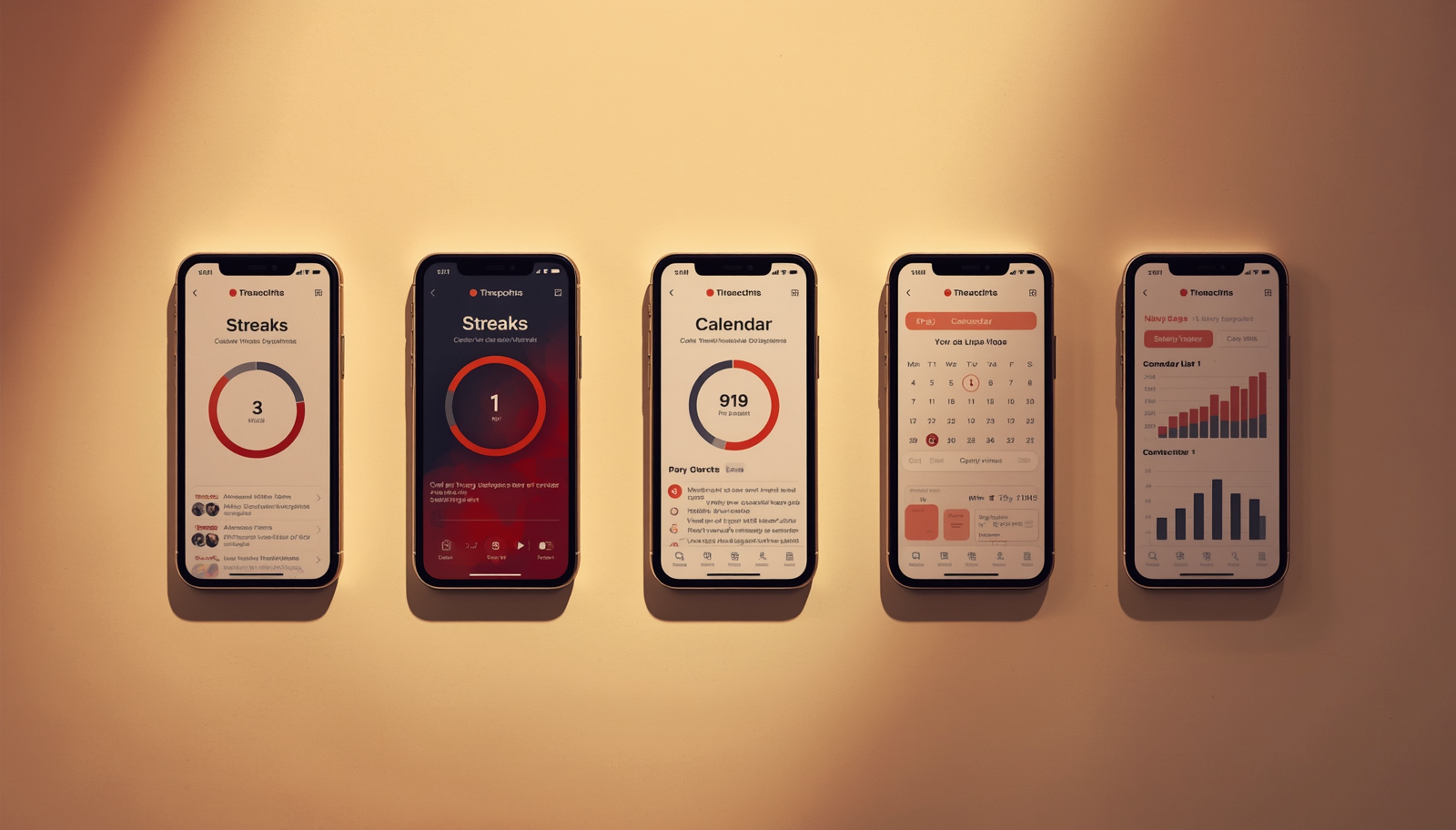
The behavior-change app market is the largest unregulated experiment on human willpower in history. Hundreds of apps, mostly with similar features, mostly with no measurable evidence of effectiveness, mostly built around the same flawed engagement loop. This piece is the honest review — which apps in the category use real behavioral science, which are essentially shame engines, and which to pick based on what you're actually trying to change.
The methodology problem
Most behavior-change apps fail at month three for the same reason: they treat streaks as success and slips as failure. This is the opposite of what the relapse-prevention literature has known since the 1980s. A slip is data; the streak metric punishes it as defeat; the user feels shame; the user disengages.
Apps that survive past month three share a different structure:
- They treat slips as information (trigger mapping)
- They use compliance windows instead of consecutive-day streaks (resilient to single misses)
- They have explicit post-slip protocols (the 45 minutes after a slip are decisive)
- They aim for graduated independence (less app usage over time, not more)
If you can't tell within five minutes of using an app whether it's doing those things, it probably isn't.
The five contenders
The apps with serious traction in the behavior-change category that we evaluated:
- Habitica — RPG-gamified habit tracker
- Streaks — minimalist habit tracker
- Brick / one sec — friction-injection apps (phone blocking)
- Fortify — recovery-specific (originally porn recovery)
- Woyuduin — AI-assisted behavior change with relapse-aware design
Not exhaustive. Apps not covered: Forest (too niche), Atomic Habits app (too thin), Streaks for the Apple Watch (not different enough from regular Streaks).
Habitica
The case for: Gamification done with self-aware humor. Real social features that work for some user types. The "RPG character" metaphor genuinely motivates a specific personality — usually younger users with a gaming background.
The case against: The gamification IS the engagement loop. You're not building the habit; you're playing the game. When the game stops being fun (typically week 8), the habit collapses with the engagement.
Best for: Users under 30 with a gaming background who specifically want gamified accountability.
The trap: The RPG progression replaces the actual habit reward. If you're building a workout habit, you should eventually feel intrinsic reward from the workout itself. Habitica makes that transition harder, not easier.
Streaks
The case for: Minimalist. Beautiful design. Apple Watch integration that actually works. No social features to distract. Strictly opinionated about a 12-habit maximum.
The case against: Streak-based mental model with all the AVE (Abstinence Violation Effect) problems. Miss a day, lose the streak. The app's notification copy is sympathetic but the metric structure is unforgiving.
Best for: Users who already have strong habit discipline and want a clean tracking tool. Not for users building habits from a low baseline.
The trap: The visual beauty makes you feel productive opening the app. Three weeks in, you notice you've spent more time admiring your streak chart than doing the habit.
Brick / one sec
The case for: Friction injection is the most under-used behavior-change mechanism. Adding a 10-second pause before opening Instagram cuts opens by 30-50% in published studies. Brick (the physical NFC tag) and one sec (the iOS Shortcut) both implement this well.
The case against: Single mechanism. These are tools, not behavior-change systems. You'll use Brick for two months, then bypass it, because friction alone doesn't replace the underlying need.
Best for: Pairing with a real behavior-change framework — Brick adds friction to the bad behavior while you're using another app to build the replacement habit.
The trap: People download friction tools instead of doing the harder work of trigger mapping and replacement-habit building. The friction tool becomes the moral-licensing artifact ("I have Brick, I'm working on this").
Fortify
The case for: One of the few apps explicitly built for porn recovery. Honest about being faith-influenced (Mormon roots — disclosed clearly). Group/community features that work for users who want accountability.
The case against: The faith framing isn't for everyone, and the secular content is thinner. The metric system still leans streak-based. Community features amplify shame for some users — the opposite of the desired effect.
Best for: Users in the specific Latter-day Saints or evangelical Christian recovery tradition, where the faith framing is a feature.
The trap: Outside that specific community, the app feels uncomfortable in a way that hurts engagement. Pick something better-aligned to your actual worldview.
Woyuduin
Disclosure: we built this. Take the assessment with that in mind.
The case for: Built explicitly around the relapse-prevention model — compliance windows instead of streaks, trigger-mapped slip data, post-slip protocols, graduated independence as the success metric. Behavioral AI surfaces relapse precursors before the user is consciously aware. Designed for users hiding the work from people in their life — quiet notifications, neutral icon.
The case against: Newer than the established players. Smaller community. Doesn't do gamification (that's a feature for our target user, but a missing-feature for users who want gamified motivation).
Best for: Users serious about behavior change who've already tried one or two streak-based apps and want something built on more recent research.
The trap: The graduation model means the app is designed to be used less over time. If your relationship with the app is "I need to feel productive when I open it daily," you'll find Woyuduin asking too little of you. That's the point, but it takes adjustment.
How to pick
The honest decision tree, by what you most care about:
- Gamified habit accountability for a young/gaming personality → Habitica
- Clean minimalist tracking for already-disciplined users → Streaks
- Friction tool to pair with anything → Brick (physical) or one sec (iOS)
- Faith-aligned porn recovery in the LDS/evangelical tradition → Fortify
- Relapse-aware behavioral AI for compulsive habits → Woyuduin
Two specific recommendations:
-
If you have 3+ behavior-change apps installed right now, delete two of them this week. Multi-app users have worse outcomes than single-app users, holding baseline discipline constant. The act of downloading more apps triggers compensatory satisfaction that displaces actual behavior change.
-
Pair a friction tool with one tracking/intervention app, not two of either. Brick + Woyuduin or Brick + Streaks works. Streaks + Habitica + Fortify does not.
Who should care
- Anyone trying to break a compulsive phone/porn/substance/screen habit: the app matters less than the model the app is built on. Pick the one whose model survives a slip.
- People supporting someone in recovery: the app they pick reveals their mental model. If they pick something streak-based, gently surface the relapse-prevention research.
- Builders in this category: the market has too many engagement-optimized apps and too few graduation-optimized ones. The opening is real.
The market is crowded, but it's crowded with apps that don't have a relapse model. The single most important question to ask about any behavior-change app before installing: what happens when I miss a day? If the answer is "streak resets to zero," look at something else.
If you're looking for the architecture in this piece — compliance windows, trigger mapping, post-slip protocols, graduated independence — that's Woyuduin. The app's success metric is you needing it less over time, not opening it more.